Labels

Showing posts with label Matthews Books. Show all posts

Thursday, 27 September 2012

Matthew's Adolescents Text 5/5

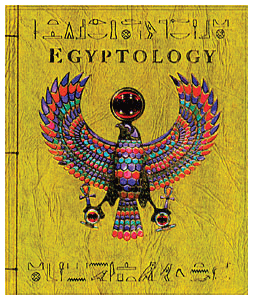
Egyptology

By Emily Sands

'Egyptology' is an informative in the form of a journal text focusing on the history of Egypt and the Egyptians. The illistrations, text and interactive segments are all arranged neatly integrated onto the pages. The book is broken up into journal entries with segments of information sketches and other features. While learning about ancient Egypt the students are developing ideas about the structure of a journal and what it looks like and is meant to contain.It is important for students to explore and study texts of formats other than narritives, as they will need to be familiar with them for future acedemic writing and critical reading.

Matthew's Adolescents Text 4/5

Finders Keepers

By Emily Rodda


This text centres on the teenage boy protagonist Patrick, who longs for adventure and excitement. While using his computer Patrick is issued an invitation to join a game named 'Finders Keepers' on a channel he knows to be non-existent. He is pulled through barrier which defies the linear nature of time to completely different world. Patrick is given clues, hints and riddles as means to find treasures which have passed through the barrier never to be seen again.


Rodda employs the literary device foreshadowing to hint to the audience events that will occur later in the plot. In ‘Finders Keepers’, the main character Patrick is accused of stealing his sister’s sunglasses and earrings. This foreshadows the game of ‘finders keepers’ he later plays, whereby objects are lost into a universe that exists parallel to our own. As this is a book containing puzzles and riddles, it could easily be used as inspiration for a in class experience involving quizzes, students could design thier own quizzes or the whole class could be quizzed in groups using a point system.

Matthew's Adolescents Text 3/5

Deltora Quest: City of Rats

By Emily Rodda


This novel is the third in an eight part series collectively titled ‘Deltora Quest’. The three young and brave protagonists Lief, Barda and Jasmine are on a long and perilous quest to retrieve the seven stones of the magic Belt of Deltora in order to overthrow the tyrannical rule of Shadow Lord. In this section of the story the group seek the opal gem. To retrieve this precious item, the companions must travel to the city of the rats and defeat a terrifying enemy, with another few challenges along the way.

Emily Rodda has a simple and direct writing style. The language she uses in her children’s and teen novels adheres to a literacy competence appropriate for those at these age groups, while still maintaining an engaging imagery description and character monologue and dialogue for example. As a result her extremely inclusive as it can be easily understood even by those with restrictive vocabularies. Rodda writes from a third person perspective. She uses emotive language through her narration to convey her subjective feelings towards the characters and events that occur for example ‘In moments, elven hideous, grinning creatures were capering on the track below the tree.’ (Rodda 2000)
The three protagonists are faced with several circumstances in which they are forced to kill their enemies. Both Reeah and ten of Thaegan's eleven children become fatalities along the quest. (Rodda 2000) Although these characters are portrayed as evil and necessary casualties in order for the protagonists to survive, the slaying of these characters brings into question a heroes respect for life and its fragility. This question is not answered through Rodda’s text, but leaves the reader to contemplate, as there is really no right answer, it is all down to perspective. Young learners need to consider the shades of grey in life that are encompassed by black and white, this text and others by Rodda facilitate this reflection.

Matthew's Adolescents Text 2/5

James and the Giant Peach

By Roald Dahl

Traditionally Roald Dahl's novels are grand and obscure, 'James and thr Giant Peach' is no exception. The protagonist James, is young boy forced to live with his two horrible aunts who treat him like a slave after his parents befell a tragedy being eaten by an escaped rhino. One day James encounters an old man who offers him some mysterious green glowing crocodile tongues. James follows the old mans instructions to make a potion with the tongues but trips and falls splilling it all over a peach tree. Enchanted by the concoction one of the peaches on the tree grows to a gargantuan size. Naturally his two Aunts proclaim the peach as belonging to them and the fruit becomes a major attraction. One night James sneaks outside to have a bite of the peach and ends up inside with an assortment of giant insects. James and the Insects travel across the ocean to the Empire States building where he confronts his greatest fear.


The language Dahl uses is simple and succinct, without over discriptive sentences, allowing the story to be very easy to follow. The book is devided into 36 chapters, consisting of two to three pages per chapter. Using small chapters allows the reader to feel a greater sense of achievement progressing through the novel, especially younger readers. The illistrations in the book although simple and black and white really bring the characters to life, even those that are not human and convey the tone of the story at each impass.
This novel follows the story structure of a journey, in this case away from misery towards belonging. Understanding the idea of a journey is important to students as it is an example of a transition and they can take many metaphorical and/or literal forms. The book repeatedly underlines the theme of 'belonging', through James plight to find where he belongs. This is an important theme to address in adolescent literature as many readers of that age demographic are just starting to think about where they fit into the world.

Matthew's Adolescents Text 1/5

Rowan of Rin

By Emily Rodda

This novel describes the journey of a young timid boy named Rowan to save his town from impending destruction. Rowan’s town of Rin is facing starvation and the helplessness when their main source of food and trade the bukshah’s water supply is dwindling. The buksha’s special water originates from a mountain where a dragon is said to live. The people of the village Rin devise an expedition to resolve this problem.  Against the wishes of his six companions, Rowan becomes a necessity for this quest when the wise woman Sheeba dictates a prophecy including him. The fellowship climbs the mountain, encountering challenge after challenge, each time losing a member of their group. Until only Rowan remains against the apparently un-mythological creature, Rowan proves his courage and defeats the dragon and restores the flow of water to the town becoming the hero that the town needed.


Rowan begins the book being perceived by his associates as being comparable to a ‘…poor little skinny rabbit…’ (Rodda 1993, pg. 18), which he himself believed. Oppositely upon the conclusion of the story Rowan was named “…the strongest and bravest...” out of all of his companions. This transition demonstrates an apparent example of a change from innocence to experience. This theme is so emphasised because growing up is a process that everyone must face at one time or another in their life, consequently young readers are able to identify with this process, perhaps even come to the realisation that it is difficult and sometimes even confronting.
 
The text describes the relationship between the bukshah and the surrounding ecosystem. The buksha drink only a certain type of water, and if this water is not available which is the situation befalling the village that Rowan lives in, the bukshah will die of thirst. This would also cause a shortage of dairy products and woollen materials for the village people. (Rodda 1993) Although composed of imaginary elements, this representation of an ecosystem implants in the minds of the readers attributes of a biosphere and the effects disturbances can have when introduced. This could easily be connected to biology strand of science. A teacher could use the study of this book to integrate science and English. An activity that could further develop this idea of ecosystems is for students to construct their own ecosystems including five or more elements, being prepared to explain the consequences of the addition or removal of certain features.


Matthew's Childrens Book 7/8

Letters from Felix

By Annette Langen & Constanza Droop

This is another Childrens Book that incooperates an interactive component into the narritive. This book tells the story of Felix, a toy rabbit who was misplaced at the airport by his owner Sophie. As he is her favourite toy Sophie is distruaght when he can not be found. But to her suprise she gets a letter from Felix who had ended up on a plane to England. The letter Sophie recieves is three dimensional on the reverse side of the page containing a real letter, the hand written, or paw written, letter displays the structure of a common letter structure. The letter includes a partial date and country of origin, the name of the recipient and author and cultural detail about England. The book continues as Felix travels to various other contries and a letter for each. Through this process children are not only learning about formative writing structure but also learning about different cultures in an engaging and fun way The story concludes seeing Felix arrive back home to Sophie with a number of souvenirs in the form of stickers that can re-inforce the learning that occured throughout the book.

Matthew's Childrens Book 6/8

Dear Zoo

By Rod Campbell

'Dear Zoo' is a fantastic example of engaging childrens literature,
no wonder it is so popular as an aid for early learning. The book is in the format of a 'flap book', and follows a repeating structure. Although the presentation of the text is relatively simple using a formal font, the minimalistic approach draws attention to the illistrations.
The text features eight animals hidden by moving elements of the book.
Early learners are excited by the interactive and suprise aspects of the story,
and after multiple readings memorising the simple characteristics of the animals such as "So they sent me a... GIRAFFE! He was too to tall! I sent him back." This childrens book is useful teaching resource for early learners and can even be adapted to suit those at higher levels of literacy competency.

Wednesday, 12 September 2012

Matthew's Childrens Book 8/8

The Man in the Moon and Me

By Louise Doughty


This is a book that my grandmother had made for me when I was three. This book tells the story of Matthew and his best friend Stacey, who are bored of the wet and rainy weather. One night they are awoken by a sad voice, and upon further investigation the two discover it was the lonly sad moon. The moon invites them to come and play with him, but it was so so far away so the moon sent a shooting star for them to travel all the way. The moon is upset with all the bad things that are in the world. Matthew and Stacey remind him of all the nice things in the world and convince the moon to cheer up. The next day was a sunny and beautiful day, and the friends knew it was all because of them.

Including children into the lititrature is a fantastic way of engaging early or any learners. A child who is emmersed within the story feels a sense of attatchment to the words and images in a book, even those learners who can not yeat read. This approach has extensive classroom implications, from including students names in literary questions to requesting students to write stories with or without illistrations that include themselves.

Tuesday, 11 September 2012

Matthew's Childrens Book 5/8


The Adventures of Egbert the Easter Egg
By Richard Armour and Paul Galdone
This loveable children’s book tells the story of an Egg named Egbert and the boy who realised his uniqueness amongst all other identical Eggs. Egbert longs to be different, waiting for Easter to come so he could finally be painted. Instead of getting any old Easter egg paint job Egbert was decorated with a face and he was so proud of it. In the Easter egg hunt Egbert isn’t found by any of the children and is left out in the rain and cold. This sparked a journey and Egbert rolled from place to place until he finally found his way back to the child who had painted him. The boy recognised Egbert apart from all the other eggs and he was home at last.  The author conveys the theme of being different and special through an egg whom the reader creates and attachment with and despite being an everyday common object is given an almost a personality by the addition of a face.

Matthew's Childrens Book 4/8


The Big Yawn
By Keith Faulkner
This children’s book is simple narrative which in many ways is similar to “There Was an Old Woman”. The text from each page is featured on every subsequent page due to holes in pages and this continues throughout the book. The illustrations are cute and really convey the tone of the book, which is ‘the feeling of being tired” through a series of yawing animals. The structure of the book may also contribute to student understanding of the concept of increasing sizes due to the animals progressively get bigger as the story unfolds.

Matthew's Childrens Book 3/8


Fox in Socks


By Dr. Seuss

Dr.  Suess books are fantastic; they all have engaging fun story lines and are designed to teach children how to read and pronunciation. Fox in Socks is no exception; the funny illustrations and the charming text bring the story to life. The narrative follows two characters Mr. Fox and Mr. Knox, Mr. Fox is a persistent quizzical fox who attempts to get Mr. Knox to do a long line of ridiculous tasks. Mr. Knox is not enjoying Mr. Fox’s games at all, but puts up with it until eventually he’d had enough and walked away. It’s a simple plot, but one that introduces children to the idea of saying no in situations they don’t want to be in.

Tuesday, 28 August 2012

Matthew's Childrens Book 2/8

Giraffes Can't Dance
Authors: Andreae, G. Parker-Rees, G.

This Children book depicts a clumsy giraffe
named Gerald, who feels excluded and 
ridiculed for his inability to dance. Gerald
with the help of a cricket, learns to dance
to his own beat proving that anyone can dance.

The book follows the template for narrative structure,
with orientation, complication and solution
elements. The text is mainly structures in a four
line style, occasionally one line to make certain actions dramatic.
This book is useful for teaching children
about the potential they may have even if they
don't realise it, and stress the importance of
having confidence in oneself.


Sunday, 5 August 2012

Matthew's Childrens Book 1/8

Elmer the Patchwork Elephant

Author/Illustrator: David McKee
“Elmer the Patchwork Elephant” was always one of my favorites as a child. Recently I was reading books to the children at the childcare center I work at I came across a copy of the book and instantly picked it up. The range of bright beautiful colours displayed on the cover and throughout the book are visually appealing. Especially for children who appreciate these types of colours and patterns.
Elmer is an anthropomorphized Elephant with the characteristics of a child. Who is different to all the other elephants, as instead of being grey his skin is a colourful patchwork. Elmer tries to homogenous with the other elephants by making his skin grey, however he discovers that being just like everyone else is boring and depressing and decides that he much prefers his own special patchwork.
The story had a cardinal theme regarding the importance of being oneself, through the protagonist Elmer’s experience of blending in and being exactly the same as all the other elephants. The plot resolution in the book saw all the other Elephants expressing their ‘true colours” through the actions of Elmer. I believe that this focus’ on an important aspect of any youth with an emerging and developing identity, instilling them with the idea that it is ok to share your personality with others and it can produce positive results.